
The Ultimate Guide to Netaji Subhash Chandra Bose: Architect of India’s Freedom & Modern Strategic Vision
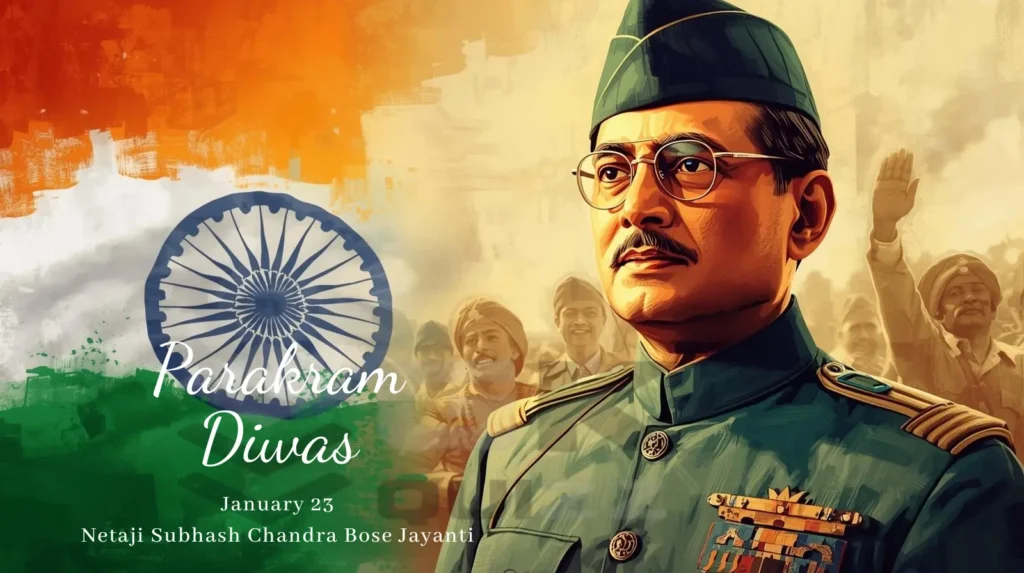
Today, as the nation observes Parakram Diwas, we celebrate the 129th birth anniversary of Subhas Chandra Bose—affectionately known as Netaji. For students and aspirants, Netaji is not just a historical figure; he is a case study in leadership, administrative planning, and international relations. This comprehensive blog post explores his life, his revolutionary milestones, and why his vision is the blueprint for India’s modern-day diplomacy.
Exam Snapshot: Key Dates for Revision
- 1897: Born in Cuttack.
- 1921: Resigned from ICS.
- 1938: President of Haripura Session.
- 1939: Formed the Forward Bloc.
- 1943: Proclaimed the Azad Hind Government (Oct 21).
- 1945: Reported death in a plane crash in Taihoku (Aug 18).
Netaji Subhash Chandra Bose: Architect of India’s Freedom & Modern Strategic Vision
I. Netaji Subhas Chandra Bose Early Life: The Spark of Rebellion
Born in 1897 in Cuttack, Odisha, Subhas was the ninth child of Janakinath Bose, a prominent lawyer. His brilliance was evident early on; he was a top-tier student at Presidency College, though he was expelled for his nationalist stance after an incident with Professor Oaten—a sign of the “militant” spirit to come.
- The ICS Sacrifice: In 1920, at his father’s request, he went to England and cleared the Indian Civil Service (ICS) exam with the 4th rank. However, he refused to serve the British Raj, famously stating, “The best way to end a government is to withdraw from it.” He resigned in 1921 and returned to India to join the struggle.
- The Mentor: He joined the Congress under the guidance of Chittaranjan (C.R.) Das, whom he regarded as his political guru. He even served as the CEO of the Calcutta Municipal Corporation under Das’s Mayoralty.
II. The Ideological Architect: Haripura, Tripuri, and Beyond
Netaji’s time in the Indian National Congress (INC) was marked by a push for “Purna Swaraj” (Complete Independence) at a time when others were still debating Dominion Status.
1. The Haripura Session (1938)
Elected as President, Netaji’s address was revolutionary. He spoke not just of freedom, but of post-independence reconstruction.
- National Planning Committee: He established this committee with Jawaharlal Nehru as its chairman. This was the ideological precursor to the Planning Commission (and now NITI Aayog), proving that Netaji was a visionary of the Socialist Economy.
2. The Tripuri Crisis (1939)
In a historic election, Bose defeated Pattabhi Sitaramayya (Gandhi’s preferred candidate). However, internal friction led to his resignation. He did not retreat; instead, he founded the All India Forward Bloc within the Congress to consolidate the left-wing and radical elements of the party.
Also Read: UGC Kya Hai? UGC Full Form, Karya, Role & Powers (Hindi)
III. The Great Escape & The Global Mission
Netaji realized that to defeat an Empire on which the sun never set, India needed international allies.
- The Path of Disguise: Under house arrest in 1941, he escaped from his Elgin Road residence in Calcutta. Disguised as a Pathan named Ziauddin, he traveled through Peshawar, Kabul, and Moscow to reach Berlin.
- The German Chapter: He met Hitler and other German leaders to seek support. While in Germany, he established the Free India Centre and the Indian Legion. It was here that the title ‘Netaji’ and the greeting ‘Jai Hind’ became synonymous with his name.
- The Submarine Odyssey: In 1943, realizing the theater of war had shifted to Asia, he undertook a perilous 90-day journey in a German U-boat (U-180), transferred to a Japanese submarine (I-29) in the middle of the Indian Ocean—the only civilian transfer between two submarines during WWII.
IV. The Azad Hind Fauj (INA): “Delhi Chalo”
Upon arriving in Singapore, he took command of the Indian National Army (INA), which had been initiated by Captain Mohan Singh and Rash Behari Bose.
- Provisional Government (Arzi Hukumat-e-Azad Hind): On October 21, 1943, Netaji declared India’s first provisional government in exile. It had its own currency, court, and civil code.
- Rani Jhansi Regiment: Showing his progressive vision, he formed one of the world’s first all-female combat units led by Dr. Lakshmi Sahgal.
- The Imphal-Kohima Campaign: The INA, alongside Japanese forces, reached Indian soil in 1944. Though they were eventually forced to retreat due to the monsoon and supply chain issues, the INA’s bravery shook the foundations of British loyalty in the Indian Army.
V. Netaji’s Legacy in 2026: Interlinking the Past and Present
Modern Indian Diplomacy carries the “DNA” of Bose’s vision:
- Strategic Autonomy: Netaji’s ability to talk to world powers on his own terms is the root of India’s current “Multi-alignment” strategy.
- Act East Policy: Our deep security and economic ties with Japan and Singapore are a continuation of the bridges Netaji built in the 1940s.
- Diaspora Engagement: Netaji’s mobilization of Indians in Southeast Asia is the earliest and most successful example of leveraging the Indian Diaspora for national interest.
Also Read: Important Days in January 2026: Guide for Competitive Exams
VI. Netaji Subhas Chandra Bose Exam-Oriented Snapshot (Quick Revision)
| Category | Key Facts for Exams |
| Literary Works | The Indian Struggle (1920–1942); An Indian Pilgrim (Autobiography). |
| Major Slogans | “Give me blood, and I shall give you freedom”; “Jai Hind”; “Delhi Chalo”. |
| Political Party | All India Forward Bloc (1939). |
| International | Established the Indian Legion in Germany; Azad Hind Bank in Rangoon. |
| Recent Honors | Parakram Diwas (Jan 23); Hologram/Statue at India Gate (Canopy); Subhas Chandra Bose Aapda Prabandhan Puraskar (Award for Disaster Management). |
Netaji Subhas Chandra Bose: Practice Quiz
Here are the Top 20 Exam-Oriented Multiple Choice Questions (MCQs) based on the life, struggle, and legacy of Netaji Subhas Chandra Bose.
Netaji Subhas Chandra Bose – MCQ Quiz (With Answer)
Show Answer
Explanation: Netaji was born on January 23, 1897, in Cuttack, Odisha.
Show Answer
Explanation: Deshbandhu Chittaranjan Das was Netaji’s mentor.
Show Answer
Explanation: Netaji was elected President at the Haripura Session.
Show Answer
Explanation: Pattabhi Sitaramayya was backed by Mahatma Gandhi.
Show Answer
Explanation: Netaji founded the All India Forward Bloc.
Show Answer
Explanation: He escaped disguised as Ziauddin, a Pathan insurance agent.
Show Answer
Explanation: Netaji set it up in Berlin, Germany.
Show Answer
Explanation: Indian supporters in Germany first called him Netaji.
Show Answer
Explanation: Captain Mohan Singh founded the INA in 1942.
Show Answer
Explanation: Declared on October 21, 1943, in Singapore.
Show Answer
Explanation: Andaman → Shaheed, Nicobar → Swaraj.
Show Answer
Explanation: Dr. Lakshmi Sahgal commanded the women’s regiment.
Show Answer
Explanation: “Delhi Chalo” motivated the INA soldiers.
Show Answer
Explanation: “The Indian Struggle” covers 1920–1942.
Show Answer
Explanation: Battles were fought in Manipur and Nagaland.
Show Answer
Explanation: Instituted by Government of India.
Show Answer
Explanation: Hunter Commission was linked to Jallianwala Bagh.
Show Answer
Explanation: A 28-foot statue was installed at India Gate.
Show Answer
Explanation: Netaji started the newspaper “Swaraj”.
Show Answer
Explanation: This slogan was given by Lal Bahadur Shastri.
Final Thought
Netaji Subhas Chandra Bose was a “Realist” in a world of idealists. He understood that power is the only currency in global politics. As India moves toward Viksit Bharat 2047, the “Parakram” (Valour) of Netaji remains our guiding light.
Comprehensive FAQs: Netaji & Parakram Diwas
1. Why is January 23rd celebrated as Parakram Diwas?
Ans. In 2021, the Government of India declared Netaji’s birthday as Parakram Diwas (Day of Valour) to honor his indomitable spirit and selfless service to the nation.
2. Who was the founder of the Indian National Army (INA)?
Ans. While Netaji gave the INA its most powerful momentum, it was originally founded by Captain Mohan Singh and Rash Behari Bose in 1942.
3. What were the famous slogans given by Netaji?
Ans. His most iconic rallying cries include “Jai Hind,” “Delhi Chalo,” and the immortal promise: “Give me blood, and I shall give you freedom!”
4. Which book provides an autobiographical account of Netaji’s life?
Ans. Netaji authored “The Indian Struggle (1920–1942)” and an unfinished autobiography titled “An Indian Pilgrim.”
5. What were the “Shaheed” and “Swaraj” Islands?
Ans. In 1943, Japan handed over the Andaman and Nicobar Islands to Netaji’s Provisional Government. He renamed Andaman as Shaheed and Nicobar as Swaraj.
6. Who led the women’s regiment of the INA?
Ans. The all-women Rani of Jhansi Regiment was led by Captain Lakshmi Sahgal (formerly Dr. Lakshmi Swaminathan).
7. How did Netaji contribute to Indian economic planning?
Ans. In 1938, as Congress President, he set up the National Planning Committee, advocating for large-scale industrialization—a vision that became the bedrock of modern India’s economy.
8. What was the name of the newspaper edited by Netaji?
Ans. He edited the newspaper “Forward,” founded by C.R. Das, and later started his own newspaper, “Swaraj.”
9. In which battles did the INA fight on Indian soil?
Ans. The INA, alongside Japanese forces, fought the British in the Battles of Imphal and Kohima in 1944.
10. What are the major investigative commissions related to Netaji’s death?
Ans. The three major ones are the Shah Nawaz Committee (1956), the Khosla Commission (1970), and the Mukherjee Commission (2005).